

KSD Custom Wood Products

 
Email: kdoubleday@ksdcwp.com       (603) 796-2951
  • Home
    • Residential
    • Commercial Architecture
    • Educational & Institutional
  • Products
  • About Us
  • Craftsmanship
    • Streamlined Manufacturing
    • Glass Shop
  • Contact
Custom Wood Products, Inc.
Made in New Hampshire With American Pride
EST. 1989

Creating a Tudor Style Home from an Existing House

December 20, 2017 by kim

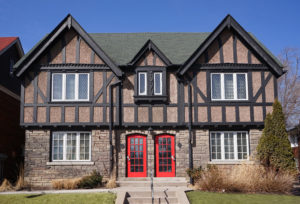
If there is one style of architecture that stands out noticeably amongst the rest, it’s the Tudor style of home. Love them or hate them, you have to admit that Tudors have a particular charm that you would be hard-pressed to find in any other style. This is in due part to the fact that Tudors combine elements of late-medieval and early-Renaissance architecture wrapped in a Craftsmen encasing. The Tudor home is a combination of styles, but nevertheless, achieves a look all its own.

Unfortunately, the majority of Tudor homes in New England and around the U.S are unbelievably expensive. This is in large part to the type of materials required and the amount necessary to perform the job. Fret not. If a Tudor home is what your heart desires, you can still achieve a Tudor-inspired home in your existing house. From historic reproduction doors to the design of the roof, we show you what it takes to turn your existing home into a Tudor home of your own.

Materials
A home designed in the Tudor style typically incorporates a multitude of materials that can be divided into two sections: top half and bottom half. The materials for the top half of the home are usually wood and either stucco or plaster. This creates the decorative timbers that are indicative of Tudor architecture. For the bottom half, you can incorporate brick, stone or wood, with brick being the most common.

Doors and Windows
The doors and windows that are incorporated in Tudor homes are very distinct. Using the right doors and windows is extremely important for pulling off the entire look. Instead of traditional double hung windows, you’ll find that Tudors use casement windows arranged in tidy rows instead. The door of a Tudor home is typically wood paneled and often rounded. This is why many people opt for historic reproduction doors and windows to guarantee that the look can be achieved successfully.

Post and Beams
Just like the doors and windows, post and beams are equally as important to the overall look of successfully creating a Tudor-styled home. This is a major part of the character to the home and is what makes a Tudor home readily identifiable no matter where you are. To achieve this look, the post and beams need to be arranged as the frame and then filled in with the stucco or plaster.

Creating the Tudor home of your dreams isn’t far from reality. These simple changes can all be easily adapted for your existing home; turning your current home into a dream castle.
Filed Under: Uncategorized Tagged With: historic reproduction doors

A Historic Architecture’s Guide to New England Homes

October 20, 2017 by kim

One of the first things people associate with New England, aside from the Patriots, is the architecture. Reminiscent of simpler times in American History, New England-styled architecture is popular the world over for its character, charm, and history. In fact, many of the buildings and homes that we see today are historic and in their original state from the 1700s while others have a few cosmetic touches and historically reproduced pieces to restore the homes to their original glory.
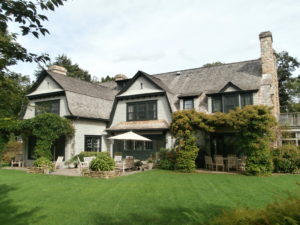
With over 400 years of history behind them, the New England style of home is just as diverse as it is respected. From farmhouse styled homes to primitively designed shops, classic American culture is preserved in the very woodworked frames of the many styles of the New England home. Even those with modern updates and historical reproduction doors or windows still hold the basic charms that serve as reminders of gorgeous New England architecture. While there are a number of different styles, the most common types include seaport, farmhouse, coastal, and of course traditional.

Seaport
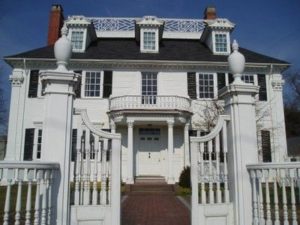
This style is also referred to as the Federal/Adam Style and dominated much of the architectural scene from the late 1700’s through the mid-1800’s. Typically found in areas such as Portsmouth and Boston, it’s a re-imagined version of the Georgian style home. Seaport styles are usually brick homes with boxed windows, white trims, and adorned with cast iron lamps. While many of these historic homes have seen updates and historically reproduced doors, windows, and exteriors, many of these buildings and homes are still standing in their original condition, remaining as constant reminders of true American architecture.

Farmhouse
Farmhouse styles are exceptionally trendy nowadays. Everyone wants a traditional farmhouse styled kitchen or bedroom straight from an HGTV episode. But in New England, large, airy farmhouses are a cultural staple. Nothing evokes feelings of what true American hard work means more than a farmhouse styled-home. Aside from the medium to large plots of land, farmhouses homes are idealized for their white woodwork, central hearth or fireplace that could be used for cooking, and colonial styles as well.

Coastal
If you’re familiar with towns such as Nantucket and even the Hamptons, you’re familiar with the coastal style of home that is a staple in New England. Even if you’ve never personally visited the area, you know all too well the style that is surrounded by crystal blue waters and weatherworn wood. Rising to popularity in the late 1900’s, expansive driveways and meticulously manicured lawns are just small pieces to the world of coastal homes. If the beautiful water view isn’t enough, you’ll know a coastal home when you see neutral shingles surrounded by white trim, verandas, and colonial revival styles on sprawling homes.

Traditional
It’s practically impossible to discuss the beauty that is architecture found throughout New England without discussing traditional styled homes. When you see these gorgeous homes, you know exactly where you are and what you are looking at. Traditional New England homes are colonial in design and typically denoted by columns, dormers, white built in cabinets and kitchens. These iconic homes are what many build their American dreams around.

Whether New England homes have your favorite style of architecture or not, the fact still remains they are historically beautiful in their own right. A tour through New England is a tour through an American time capsule.

Filed Under: Uncategorized Tagged With: historic reproduction doors, historical reproduction doors

Renovation vs Restoration: What’s Best for Your Old Home

February 17, 2017 by kim

homeIf you are already the proud owner of an older, historic home, then you are familiar with the unique set of challenges that you are faced with maintaining that property. Living in a piece of history may feel like living in a time capsule. Owners of historic homes who want to update their house are faced with a different set of obstacles and guidelines than those with more modern, 21st-century homes. From specific exterior paint colors to differences in structural and plumbing facilities, historical homeownership can get tricky. That is why many people ask the question, “Which is better, a renovation or a restoration”.

This question often tricks many people because they fail to understand the difference between restoration and renovation.  They are actually opposite terms. Restoration is returning a structure to its former condition. This can be as simple as fixing a hole in the wall to putting in historic reproduction doors that are reminiscent of the house’s place in history. On the other hand, to renovate means to make something brand new. Adding all new fixtures, doors, and windows or updating appliances is considered a renovation.

Below are a few ideas to consider before jumping headfirst into an expensive decision that is incorrect for your needs.

Review Your Home’s History
Owning an older home is exciting, especially if you’re a history buff.  Many people live in a historic home without knowing its historical significance. Was it a meeting hall for the town or banquet hall for nobles? Did an important event occur in your home? Who previously owned it? Consider researching the history of the home before beginning any changes. The original purpose of the building may serve as a jumping off point for creative ideas and inspirations about how to design your home. While researching, you may learn about the different styles of designs for doors and windows that were indicative of the time. Pay attention to these details as this can help you determine if you want to restore those portions of the house to reflect the history or if you want to renovate instead. Check with your local Historical Society for help.

Evaluate Existing Changes
When thinking about your own design changes, consider any previous changes or remodels to your home that have been done before you moved in. As you research the original condition of your home, you may find that unexpected changes and updates were made to the structure. This can greatly affect what you may be able to do going forward.  Thoroughly research the importance of certain design elements and placements of items like doors and pillars, which could greatly affect the integrity of the home.

Preserve the History
Choosing to live in a historic home means you have signed on to preserve a piece of history.  That is why it is important to understand that any changes made to your home need to preserve the history of the home. Matching the doors and windows can be one of the most challenging aspects to fixing up older homes, but it is one of the most important design elements. Finding matching or complementary historic reproduction doors can help elevate any new additions or changes made to the home.  Updates made to the home should not take away from the history of the home, but instead should be a story of transformation from the original time period to the time of the new updateNever falsify the history of your home.

Historic homeownership is rewarding yet challenging. You are living in a piece of history and can help preserve a legacy while creating your own. Be smart about the changes you need to make. For more help or information about custom wood solutions and historical restorations, be sure to follow our blog or check out our website.

Filed Under: Uncategorized Tagged With: historic reproduction doors


The best value and quality every time.
KSD Custom Wood Products, Inc.
102 High Street
Boscawen, NH 03303
Phone (603) 796-2951
Fax (603) 796-2133
© 2015 KSD Custom Wood Products, Inc.

A Veteran Owned Business.
KSD Business Hours Monday - Friday 8AM to 5PM Eastern
Website Designed by www.HitchcockProductions.com